TLDR: Construction bookkeeping is not regular small business bookkeeping with a hard hat on. It tracks money by job, not just by month, so you can see which projects make you money and which ones quietly bleed it. Contractors who run their books like a retail shop end up guessing at profitability, missing deductions, and getting blindsided by cash flow gaps between draws. If you are a contractor in the Des Moines metro doing real volume, you need job costing, retention tracking, work-in-progress reporting, and someone who understands how construction money actually moves. Performance Financial builds that system for contractors across Iowa, and you can book a Tax and Accounting Analysis to see what your books are missing.
Why Contractors Keep Asking This Question
Most bookkeepers learn on restaurants, salons, and online shops. Those businesses sell a product, collect the money, and book the revenue. Simple.
Construction does not work that way. You bid a job months before you finish it. You buy materials up front. You wait on draws. You hold retention. You run three crews on five jobs at once. A bookkeeper who treats your contracting business like a coffee shop will produce financials that look fine and tell you nothing useful.
That gap is exactly why so many contractors search for help with construction bookkeeping. They sense their numbers are not telling the real story, and they are right.
What Makes Construction Bookkeeping Different From Regular Bookkeeping
Regular bookkeeping answers one question: did the business make money this month?
Construction bookkeeping answers a harder one: which jobs made money, which lost it, and why?
Here is what gets tracked in a real contractor accounting system that a generic bookkeeper skips entirely.
Job Costing
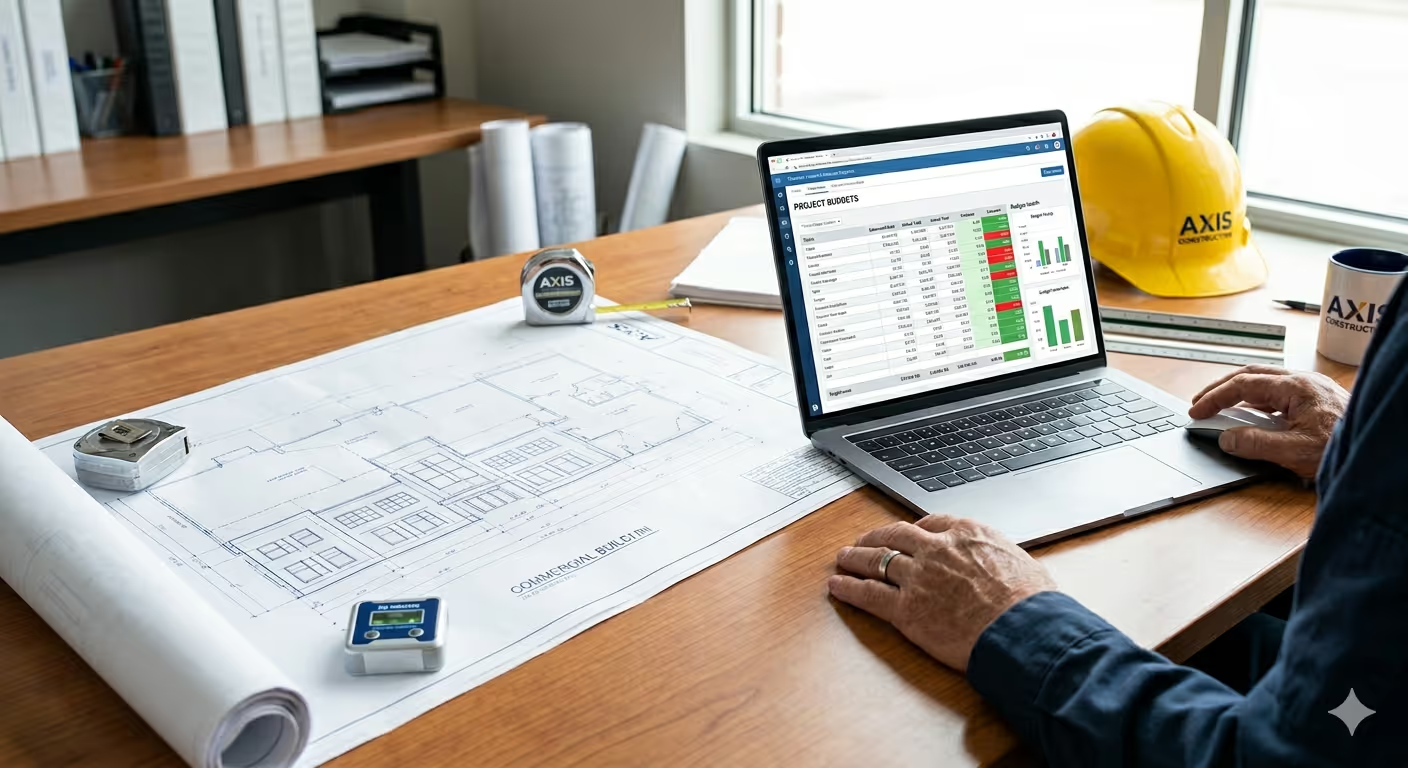
Every dollar of labor, material, subcontractor cost, and equipment gets assigned to a specific job. Without job costing, you have no idea whether the kitchen remodel on Maple Street made 30 percent or lost 10 percent. You only see one big lump of revenue and one big lump of expense.
Job costing is the foundation of contractor profitability. It is also the single most common thing missing when a contractor brings us books from a previous bookkeeper.
Work in Progress Reporting
Long projects span months. Work in progress reporting recognizes revenue as you complete the work, not all at once when you get paid. This keeps your financials honest and is what banks and bonding companies want to see when you ask for a line of credit or a larger bond.
Retention Tracking
General contractors hold back a percentage of your payment until the job is fully done. That retention is money you earned but have not collected. A generic bookkeeper often records it wrong or ignores it, which distorts both your revenue and your cash position.
Equipment and Material Cost Allocation
Construction runs on trucks, tools, and materials. Tracking equipment depreciation and allocating material costs to the right jobs changes both your profit picture and your tax bill.
Why "Good Enough" Bookkeeping Costs Contractors Real Money
When your books are wrong, the damage is not theoretical.
You bid the next job based on bad numbers, so you underprice work that is actually thin on margin. You miss equipment deductions and section 179 opportunities because nobody flagged them. You hit a cash crunch between draws because nobody forecasted it. And when tax season arrives, your reactive tax preparer scrambles through a year of messy records instead of having executed a plan.
The IRS has specific rules for how construction businesses recognize income, including the percentage of completion method and completed contract method. Getting this wrong is not a minor bookkeeping error. It changes when you owe tax and how much.
Do You Need a Construction Bookkeeper or Outsourced Accounting?
This is where contractors get stuck. They think the choice is between doing it themselves, hiring an in-house bookkeeper, or finding a cheap bookkeeping service.
There is a fourth option that fits most growing contractors better: outsourced accounting built for construction.
A junior bookkeeper enters transactions. An outsourced accounting partner enters transactions, builds the job costing system, produces the reports you can actually use to bid and manage, watches your cash flow, and plans your taxes throughout the year. You get the outcome of an in-house accountant without the payroll cost of one.
Performance Financial works specifically with general contractors and builders across Iowa, from remodelers and painters to flooring and concrete specialists. The whole point is that we already speak construction, so you are not training a bookkeeper on how your business works.
What Good Construction Bookkeeping Gives You
Done right, your books stop being a tax-season chore and become a management tool.
You see job-by-job profitability, so you bid smarter and chase the work that actually pays. You get clean financials that banks and bonding companies trust. You stop getting surprised by cash flow gaps because someone is forecasting them. And your taxes get planned in advance instead of reacted to in April.
That is the difference between an amateur bookkeeper and a real construction accounting partner.
Frequently Asked Questions
How is construction accounting different from normal accounting?
Construction accounting tracks profit by individual job rather than just by month, handles long projects that span multiple periods, accounts for retention held by general contractors, and uses specific income recognition methods the IRS requires for contractors. Regular accounting was not built for any of that.
Can QuickBooks handle construction bookkeeping?
QuickBooks can handle it when it is set up correctly for job costing and run by someone who understands construction. Out of the box, with generic categories, it usually does not give contractors the job-level detail they need. The software is only as good as the system built around it.
What is job costing and why do contractors need it?
Job costing assigns every labor hour, material purchase, subcontractor invoice, and equipment cost to a specific project. It is the only way to know which jobs actually make money. Contractors who skip it are bidding and managing blind.
Should a small contractor hire a bookkeeper or outsource accounting?
Most growing contractors get more value from outsourced accounting than from a single in-house bookkeeper. You get the full outcome, job costing, clean reports, cash flow oversight, and tax planning, at a fraction of the cost of a salaried hire, and from people who already understand construction.
Does Performance Financial work with contractors outside Des Moines?
Yes. Performance Financial serves contractors throughout the Des Moines metro including Waukee, Ankeny, West Des Moines, and Pella, as well as across Iowa and the broader Midwest.
Stop guessing whether your jobs are actually profitable. Book a Tax and Accounting Analysis with Performance Financial and we will show you exactly what your current books are hiding and what a real construction accounting system would tell you.
Performance Financial CPA, Tax and Accounting helps contractors and builders across Des Moines, Iowa, and the Midwest build job costing systems, keep pristine books, and reduce taxes through proactive planning.
Schedule a Tax & Accounting Analysis Now
Step 1 - Fill out the form below.
Step 2 - Select a time.
Step 3 - Provide documents.